
Low Cost Solar Powered Cold Storage for Fish
10.21 - Low Cost Solar Powered Cold Storage for Fish
Emma Hills, University of Guelph, Canada
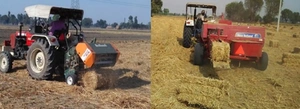

Figure 1: Examples of round bales (left) and square bales (right) (Brar & Sharma, 2021).
Suggested citation for this chapter.
Hills, E. (2026) Low Cost Solar Powered Cold Storage for Fish. In Farmpedia, The Encyclopedia for Small Scale Farmers. Editor, M.N. Raizada, University of Guelph, Canada. farmpedia.org
Introduction
In sub-Saharan Africa, limited access to properly refrigerated goods means that around 50% of perishable products never reach the market, most prominently dairy, fish, fruits, and vegetables; these items are extremely valuable in this region (Jahic, 2025). The African continent loses $1.2 billion annually due to poor refrigeration and infrastructure, with 600 million people living without consistent access to electricity, affecting their ability to properly store food (Jahic, 2025). A majority of Africans get their food through informal markets. The food that arrives at these markets typically originates from smallholder farms, but the safety standards during transportation are not always strictly enforced. In certain regions of Africa, where food travels long distances in hot climates without adequate packaging, contamination is more likely (Thelwell, 2024). This especially affects fish: local peoples frequently get sick from poor cold storage of fish in Africa. Inadequate refrigeration, broken cold chains, and unhygienic handling allow bacteria like Salmonella and Vibrio to grow, leading to high rates of foodborne illnesses. Fish spoilage is rapid in high temperatures, causing food safety risks (Ward et al., n.d.). These post-harvest losses undermine household incomes, increase food prices, and exacerbate food insecurity. For farmers and fishers, this results in significant income losses, and for consumers, it means higher prices and food shortages. This puts farmers in a repetitive cycle of low income, affecting their ability to produce quality goods. An excellent solution to this challenge is solar powered cold storage. Solar-powered and hybrid cooling systems are increasingly important in remote, off-grid African fishing communities, enabling refrigeration where electricity is unavailable.
Solar powered cold storage models
Solar powered cold storage, suitable for fish, is available in different sizes. In Figures 1 and 2, two different options for solar powered cold storage are shown. Figure 1 shows an inexpensive (<$200 USD) D.C. powered small cold storage unit that uses solar powered batteries; it is suitable for an individual family.


Figure 1. Example of a large capacity (108 L) solar freezer suitable for off-grid use. It uses DC power to connect to solar panels. Cost: $180 USD (2026). Source: Made in China Company: Link
Figure 2 shows an example of a larger freezer suitable for a group of fishers. These large, cold storage rooms are powered by Phase Change Material (PCM) technology, which uses thermal energy storage instead of batteries (Racplus.com, 2019). PCM cold rooms store cooling as thermal energy, functioning like a battery and reducing reliance on electrical batteries (Climate & Clean Air Coalition, n.d.). During the day, solar panels power the refrigeration unit while at the same time, it freezes a phase change material inside the cooling plates. These plates act as thermal batteries, releasing stored “cold” energy overnight which allows for 24-hour operation with only 6–7 hours of sunlight. Each cold storage room has a capacity for 5 metric tonnes of seafood, providing reliable and clean cooling for fishers. The system uses eco-friendly refrigerant propane (R-290) which has very low global warming potential (GWP of 3) and zero Ozone Depletion Potential (ODP), contributing to the commitment of nations such as Kenya to phase out ozone-depleting substances (Climate and Clean Air Coalition Secretariat, 2025).

Figure 2. An example of a larger scale solar powered cold storage unit for groups. Note the solar panels located above the cold storage unit. Picture taken from “Cold Hubs” located in Kenya. (ColdHubs is Nigeria’s Largest Cold Chain Network, n.d.)
Small solar powered units: cost and operating instructions
There are many cheap solar powered cold storage options for an individual family, as was shown in Figure 1 (e.g. a 12V/24V 108L solar chest freezer). These offer an efficient, off‑grid solution, ideal for regions with unstable power or remote living conditions. Their dual‑power AC/DC capability and strong insulation make them reliable for preserving fish and other perishables while minimizing energy costs. These are perfect for African climates with any solar‑powered setup; they deliver dependable cooling performance without reliance on grid electricity. Many options are available, as illustrated by Table 1:
Table 1. Comparison of examples of different solar powered cold storage units. Generated with assistance from ChatGPT.

Sources: BougeRV Canada. (n.d.); Freezer Review.com (2025); Solar Power Depot (2022).
Step by step instructions:
Step 1: Choose an energy-efficient DC freezer
Use a 12V/24V DC freezer (not a regular AC fridge) because DC appliances are designed for solar and use much less energy. Typical power: 35–60W (Source: New FAO Guide Explores Solar Cold Chain Solutions for Small-scale Fisheries, n.d.; Stephen, 2025)
Step 2: Estimate daily energy use
This determines your solar panel and battery size. Example: 50W freezer × 24 h = 1.2 kWh/day (Source: Cold Storage | Food Loss and Waste in Fish Value Chains | Food and Agriculture Organization of the United Nations, n.d.)
Step 3: Size the battery
You might want 1–2 days backup storage in case, this ensures cooling continues at night or cloudy days. Example: 1.2 kWh/day → need ~2.4 kWh battery. At 12V → ~200Ah battery. (Source: “Small-scale off Grid Solar PV Installation Manual,” 2012, World Bank Group, 2025)
Step 4: Size the solar panels
Solar must generate more than daily consumption. Example: 1.2 kWh/day ÷ ~5 sun hours = ~250W panels. Use: 200–300W solar panel system (Source: Off-grid Renewable Energy Statistics 2025).
Step 5: Add a charge controller
Connects solar panels to the battery safely. This prevents overcharging. The two types are: PWM (cheaper) and MPPT (more efficient) (Source: Practical Action, 2025)
Step 6: Connect components
Basic system flow: Solar panel to charge controller to battery to freezer. Freezer runs directly from battery. No inverter needed (if using DC freezer) (Source: Solar Energy and the Cold Chain. A Guide for Small-scale Fisheries Interventions, n.d.).
Step 7: Install and position properly
Solar panels: Face sun (tilted ~10–15° in tropics)
Freezer: keep in shade and minimize opening
(Source: Renewable Energy for Remote Communities: A Guidebook for Off-grid Projects, 2023)
Step 8: Operate efficiently
Best practices:
- Pre-cool freezer before use
- Store fish quickly after catch
- Avoid frequent opening
(Source: Ward, 2012)
Larger solar powered units: financing and cost-benefit analysis
The initial capital cost for large, refrigerated containers online, as shown in Figure 2, range from $2,000-$8,000 USD (Alibaba, 2024). Pay-as-you-go models, which are ideal for small enterprises, are systems integrated into mini grids, which means that a solar-powered mini-grid supplies electricity to a community and then a cold storage unit is connected to that shared system. Fishers do not have to buy the equipment upfront but instead they pay small amounts as they use it, sometimes with the help of government assisted plans. Operational costs can increase by around $2.40/day due to high demand during low solar radiation periods (rainy seasons) (Carlsson et al., 2025). For example, Pay-As-You-Go (PAYG) Systems, including many initiatives such as Kuza Freezers in Kenya, offer solar freezers via a rental model, allowing fishers to pay daily or weekly for storage space, often with the option to own the equipment after a set period. There are also rental/cooperative models in which small-scale fisheries can rent space in solar-powered cold rooms installed at landing sites by companies like ColdHubs (Nigeria) (Figure 2) or SokoFresh (Kenya). In some cases, farmers and fishers can pay for storage using part of their catch or produce instead of cash.
Some residual costs are the battery replacement (every ~5–10 years) and also maintenance of compressors/inverters. The payback varies depending on utilization rate, fish volumes, market access, and financing structure:
Typical cost metrics:
Levelized cost of cooling: 0.056–0.25 €/kWh
Payback period: ~1 year (best case, Tanzania)
Payback period: ~3.5–5 years (typical systems)
Electricity cost (mini-grid): $0.26–0.31/kWh (Carlsson et al., 2025)
Benefits
Cold storage significantly extends fish shelf life, ranging from 1–2 days for a standard refrigerator (<40°F/4.4°C) to 6–12 months in a freezer (0°F/-18°C or below) (USDA, n.d.). As a result, solar powered cold storage can enhance the economic viability of small-scale fisheries by reducing food loss and waste, create new market opportunities, and raise incomes for fishers, traders and processors. In doing so, these PV (photovoltaic) systems can help reduce poverty and strengthen food security. It enables better handling of fish, supporting value-added processing and reducing the environmental impact of food waste.
Storage at low temperature is critical to preserving product quality and ensuring food safety by reducing microbial pathogens (Collin et al., 2025). The microbial ecosystem of fish originates both from the marine environment where the fish is caught, and from contaminants introduced during post-harvest handling and processing (Novoslavskij et al., 2016). This microbiota may include both spoilage and pathogenic bacteria. When fish is not stored or refrigerated properly—particularly at temperatures above 40°F (4°C)—it can cause several serious illnesses and infections. The primary risks include histamine poisoning (scombroid), and bacterial infections from pathogens like Vibrio and Salmonella (Poison Control, n.d.).
Critical Analysis
A barrier to adopting solar powered cold storage is that the initial cost to buy and install solar energy equipment, particularly the larger units, is high. This can cause challenges for small scale fisheries and can make this equipment inaccessible. However, as noted above, leasing and other options may reduce pricing. Solutions include organizing a group of SSF (small scale fisheries) or involving a local government to help with the cost of these larger units. Alternatively, small, low cost units are now available as described above for less than $200 USD.
There may be a lack of skill available locally to help with repairs and maintenance. While it may seem difficult, parts are increasingly available online but vary depending on the cold storage unit. For more “high tech” cold storage such as the “ColdHubs”, some training may be required for set up and maintenance, while the cheaper options are much easier to find videos for easy set up and care.
Solar power needs a consistent amount of sunlight to keep it going which makes it hard to maintain during rainy seasons. Maintenance of the panels is needed almost daily to keep dust and debris off so they do not interfere with panel performance.
Helpful links to get started
Solar powered deep chest freezer
Zhejiang Courage Electric Appliances Co., Ltd. (n.d.). KLG 108L Solar Electric battery powered DC Deep chest Freezer (cost <$180 USD): Link
Guide to cold rooms for meat video: Link
Solar power to reduce post-capture losses in small-scale fishing: Link
Installation manual
Small-scale Off grid Solar PV Installation Manual. (2012). In Practical Action Publishing eBooks. Link
How to gain investments
Hollister, K. (n.d.). Shuraako Capital - Mobilizing capital investments to SMEs in the Somali region. Shuraako Capital. Link
References
1. Alibaba (2024) Off-Grid Solar Cold Storage Units for African Agribusiness. www.alibaba.com. Link
2. BougeRV Canada. (n.d.). 12V Portable Fridge Canada. Link
3. Carlsson, O., Johansson, M., & Ahlgren, E. O. (2025). Utilization of a solar PV mini-grid powered cold storage to reduce fishery spoilage - A Tanzanian case. Energy for Sustainable Development, 88, 101778–101778. Link
4. Ccacoalition.org. (2025). Solar-Powered Refrigeration Pilot Addresses Fishing and Agricultural Waste in Kenya. Link
5. Collin, P., Darsonval, M., Rué, O., Ndoye, F., Alvarez, G., & Dubois-Brissonnet, F. (2025). Superchilling storage reduces the growth and diversity of bacterial communities associated with Atlantic salmon (Salmo salar) fillets. Food Research International, 224, 117836. Link
6. Climate & Clean Air Coalition (n.d.). Solar-Powered Refrigeration pilot addresses fishing and agricultural waste in Kenya. Link
7. Energy-Proceedings.org (2026). Numerical model of solar-driven cold storage for small-scale fisheries | Energy Proceedings. Link
8. BougeRV Canada. (n.d.). 12V Portable Fridge Canada. Link
9. FundsforNGOs.org. (2019) A Sample Grant Proposal on “Solar-Powered Cold Storage for Fisheries in Vanuatu’s Coastal Areas.” Link
10. Freezer Review.com (2025, November 22). 8 Best Solar Powered Portable Freezers in 2025 - Freezer Review. Freezer Review. Link
11. FAO Energy (n.d.). New FAO guide explores solar cold chain solutions for small-scale fisheries. Food and Agriculture Organization of the United Nations. Link
12. FAO Cold Storage (n.d.). Food loss and waste in fish Value chains. Food and Agriculture Organization of the United Nations. Link
13. Jahic, N. (2025, October 4). Food Security with Solar Cold Storage in Africa - The Borgen Project. The Borgen Project. Link
14. Mahanta, N. (2025, May 22). Solar-Powered Hybrid Cold Storage for Farmers | Benefits & Guide. DATOMS. Link
15. Poison Control. (n.d.). Food poisoning from fish: Scombroid | Poison Control. Link
16. Practical Action. (2025, March 13). Increasing climate resilience with off-grid solar energy. Link
17. Racplus.com (2019, December 13). Solar powered cold storage launched. Refrigeration and Air Conditioning. Link
18. Solar Power Depot. (2022, August 3). SUNSTAR 15 CU/FT SOLAR CHEST FREEZER. Source: Solar Power Depot. Link
19. Thelwell, K. (2024, May 30). 5 Facts about foodborne illnesses in Africa. The Borgen Project. Link
20. Hollister, K. (n.d.). Shuraako Capital - Mobilizing capital investments to SMEs in the Somali region. Shuraako Capital. Link
21. USDA (n.d.). How long can you store fish? Link
22. Ward, A., Beyens, Y., & SmartFish. (n.d.). Fish Handling, Quality and Processing: Training and Community Trainers manual. In SmartFish Working Papers. Link
23. World Bank Group. (2025). Tracking SDG 7 – The Energy Progress Report 2025. In World Bank. Link