
Low-Cost Cow Milking Machines for Small Scale Farmers
10.19 - Low-Cost Cow Milking Machines for Small Scale Farmers
William Downey, University of Guelph, Canada
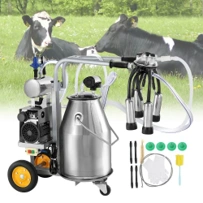

Figure 1. Example of a low cost, electric milking machine (Source: VEVOR).
Suggested citation for this chapter.
Downey, W. (2026) Low-Cost Cow Milking Machines for Small Scale Farmers. In Farmpedia, The Encyclopedia for Small Scale Farmers. Editor, M.N. Raizada, University of Guelph, Canada. farmpedia.org
Introduction
Small scale dairy farmers in Africa play a vital role in providing household nutrition to local food systems. Many of these dairy herds are small, consisting of under 10 cows (Felleke, 1999). In these remote areas, there is often limited access to modern equipment, and many of these farmers face labour constraints and low productivity. The goal of this project is to inform smallholder farmers about the potential benefits of adopting low-cost milking machines (Figure 1) into their operation, while also looking at the challenges and limitations of the products. Milking machines mechanically perform the process of milking, mimicking natural hand milking. In the process, a vacuum pump creates suction that draws milk through the teat cups that are attached to the udder. The machine then transports the milk through tubes into a collection container. Options include solar power and electrical machines.
Benefits
Currently, many small dairy farmers in Africa milk by hand, which is physically demanding and time consuming (Xulu & Naidoo, 2023). Hand milking is associated with low labour productivity, requiring one hour per kg of milk produced, showing the need for improved production systems (FAO, 2008). Studies have shown a clear difference in productivity and efficiency between hand milking and machine milking, as machine milking yields higher amounts of milk in a short period of time, without loss of fat or protein content (LRRD, 2009). Farmers will thus have more time for other farm jobs, or save money for hired laborers. Machine milking also reduces physical strain, while increasing total milk output.
Machine costs
The cost for milking machines could vary between $300-800 USD based on the model and energy source (Aron, 2026). For example, there is the VEVOR electric machine model that is shown above (Figure 1), which costs about $450 USD (VEVOR, n.d.). Other electric machines sold by AliBaba cost as low as $300 USD (Alibaba, 2026). To compare the two models in terms of storage, both models hold 25 liters or 6.6 gallons of milk. The VEVOR model runs at a 1680 RPM (revolutions per minute), while the Alibaba model runs at a slightly lower 1440 RPM. Both models are made of 304 stainless steel, which is a widely used iron, valued for durability. It is recommended that these machines are used for 1-5 cow operations (BeyondForest, n.d.). Therefore, there are low-cost milking machine options, depending on the budget and needs of the buyer.
How to Operate a Milking Machine Step by Step
If a smallholder farmer already has a small dairy herd that they have been hand-milking, it would be easy to adapt to a milking machine. Existing daily routines remain similar, and basic equipment requires minimal training:
Step 1 - Assembling Equipment: Before milking begins, the machine must be assembled in the proper manner. To do so, the farmer must ensure that the bucket, vacuum pump, tubes, and teat cups are all cleaned and properly connected. Any loose connections may cause leaks or failure in the process (VEVOR, n.d.).
Step 2 - Cow preparation: To prepare the cow for milking, the farmer must clean the udder and teats with clean water, and dry with preferably paper towels, or udder cloths if necessary (FAO, 1989). For smallholder farmers a farmer can clean reusable cloths with soap and dry in the sun. It is essential to make sure there is no dirt or debris on the udder, as this could lead to milk contamination.
Step 3 - Starting Machine: The machine turns on by switch, which activates vacuum pumps to create suction. It is important to make sure the vacuum gauge is between 10 and 13’ Hg, which is recommended for milking (AM LLC, n.d.).
Step 4 - Milking Monitoring: During milking, the farmer should monitor the process by observing the cow’s behavior and movement and ensuring that the cups remain attached properly. Massaging the udder of the animal is also helpful to keep the milk flowing at a good rate (AM LLC, n.d.).
Step 5 – Cleaning the Machine: At the end, farmers must clean the machine to remove residual milk which might otherwise attract pathogens.
Critical Analysis
Logistics: Logistics is a major concern for distribution of farm equipment in rural areas in developing nations considering the lack of transportation technology. In terms of small-scale farmers obtaining the equipment, there are multiple ways. There are regional agricultural equipment supply stores in most parts of Africa that sell these types of equipment, such as Kenya Agri, and the machines can be easily transported by vehicle (Kenya Agri, n.d.). The models above weigh about 20-50 kg according to product descriptions. Another way to increase accessibility is through development programs that provide this type of equipment. For example, in Malawi, there was a program organized by Lilongwe University that facilitated distribution of solar-powered milking machines to smallholder dairy farmers (IDRC, 2020). Another machine introduction strategy in rural Africa/Asia is through dairy cooperatives which exist in many local agricultural villages; these offer machinery-sharing, practical strategies to help each other and increase efficiency (Agriterra, 2025). As a critical mass of farmers in these locations gain access and education to these technologies and products, adoption rates will increase.
Cost-benefit analysis: A major limitation preventing small scale farmers from adopting new equipment and technology is their high cost (Hadiana, Daud, Supratman, 2019). Despite the low-cost models, hundreds of U.S. dollars can still be unaffordable for many farmers. Ultimately, a farmer must undertake a cost-benefit analysis, considering the upfront and ongoing costs versus potential economic benefits:
Costs (Average): - Upfront machine cost: $300-$800 USD
Repair Cost: Estimate 3-7% of upfront cost; $15-$70 USD/year (Business Calculators, 2025).
--- Cleaning supplies: Estimated $50 USD/year
--- Labour costs (South Africa): $1.53 USD/hour (Africa HR, 2026).
Benefits (Discussed in detail above):
--- Higher productivity.
--- Higher milk yields.
--- Reduced need for labour (including child labour, day laborers)
--- Reduced labour strain.
--- Extra time for other farm jobs.
Given the costs versus benefits, for a farmer with only 1-2 cows, it may not be worth spending extra capital on a machine, but for larger herds, or pre-commercial farmers, this could be an excellent investment.
Other potential constraints:
Training: A dairy farmer already has prior experience in milking, and the principles remain the same: good dairy practices require udder preparation, animal handling, and milk hygiene management (FAO, 2011). To address literacy barriers, picture-based manuals could be distributed and/or short instructional videos. On-farm demonstrations allow the farmers to get experience with the technology and test its efficiency.
There are additional external constraints to consider. In particular, only 53% of Sub-Saharan Africans have access to electricity, and that number is probably even lower in rural areas (World Bank, 2023). Because of this, a significant percentage of farmers do not have the means to adapt to an electrical milking machine. The training and knowledge requirements to work on the machines also pose a limitation.
Conclusion
Overall, whether adapting a milking machine is worthwhile is dependent on the individual farming household. For some farmers, it may be beneficial to reduce milking time in order to focus on other jobs, particularly larger herds. However, for farmers with smaller herds, limited capital, and small profit margins, it may not make sense to endure the upfront and ongoing costs and difficult logistics. The success of the machine depends on personal farm priorities, finances, and accessibility. If the benefits outweigh these challenges, the low-cost milking machine is a great way to make some technological product advancements in remote African/Asian agriculture and can help many farmers.
Helpful links to get started
References
Africa HR Solutions (2026). Salary standards across 54 African countries. Link
Agriterra (2025). Learning across borders: Ethiopian dairy cooperatives draw inspiration from Kenya’s cooperative strength. Link
Akam, D. N., Dodd, F. H., & Quick, A. J. (1989) Milking, milk production hygiene and udder health: Theme 3: Milk Hygiene. Food and Agriculture Organization of the United Nations. Link
Alibaba (2025) Milking machines buying guide. Link
Affordable Milkers (n.d.) Milking Machine Setup Instructions. Link
BeyondForest (n.d.) Milking Machine Prices, Types, & Benefits for Dairy Farmers. Link
Business Calculators: Bigger Bottom Line (2025) Milking Machine Types and Financing for Dairy Farms. Link
Chipula, G., Sanjika, T., Nyanda, R., Singa, D., Siwinda, D., & Chingala, G. (2020). Solar Powered Technologies for the Smallholder Dairy Industry In Malawi. IDRC Innovation Report. International Development Research Centre (IDRC), Ottawa. Link
FAO, International Dairy Federation (2011). Guide to Good Dairy Farming Practices (Animal Production and Health Guidelines No.8). Link
Felleke, Getachew (1999). Smallholder Dairy Production Systems in Africa. Food and Agriculture Organization of the United Nations. Link
Filipovic, D., & Kokaj, M. (2009). The Comparison of hand and machine milking on small family dairy farms in central Croatia. Livestock Research for Rural Development, University of Zagreb. Link
Kenya Agri (n.d.) Dairy Farming Equipment and Milking Machines. Link
Hadiana, M. H., Daud, A. R., & Supratman, R. H. (2019) Mechanizing the smallholder dairy farm: its impact on herd size and labor efficiency, Livestock Research for Rural Development, Padjadjaran University. Link
VEVOR (n.d.) Milking Machine for Cows: Step-by-Step demo of easy setup, safe operation, and fast milking. Link
World Bank (2023). Access to Electricity (% of population) - Sub-Saharan Africa. World Bank, Washington. Link
Xulu, N. H., & Naidoo, K. (2023) Traditional Milking Hygiene Practices and Their Effect on Raw Milk Quality of Rural Small-scale Dairy Farmers. African Journal of inter/multidisciplinary studies. Link