Low-Cost Straw Baler Machines
10.20 - Low-Cost Straw Baler Machines
Kaleb Hill, University of Guelph, Canada
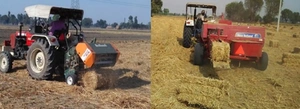

Figure 1: Examples of round bales (left) and square bales (right) (Brar & Sharma, 2021).
Suggested citation for this chapter.
Hill, K. (2026) Low-Cost Straw Baler Machines. In Farmpedia, The Encyclopedia for Small Scale Farmers. Editor, M.N. Raizada, University of Guelph, Canada. farmpedia.org
Introduction
Straw is an extremely useful byproduct of harvesting many crops, usually consisting of the stems of the crop that are discarded during harvesting. Due to the tediousness of gathering and moving the straw, it is often burned in the field, not only wasting a useful resource, but also causing a host of environmental issues. In Figure 1 above, examples are provided of mechanical balers producing both round and square small bales. Bales can be used to store animal feed such as hay, which makes it easier to store and transport, especially useful for dry seasons when grass on pastureland may not grow fast enough to keep up with the needs of grazing livestock. Increasing access to mechanical balers would allow for more readily available use of straw by farmers. However mechanical balers are often expensive and many require a tractor to operate, and even those that do not, still require a motor or engine to run, which will need power often in the form of diesel fuel. These factors cause mechanical balers to be financially out of reach for smallholder farmers. This chapter describes lower cost mechanical balers.
How does a mechanized baler work?
An inexpensive mechanized straw baler ($1400-$2400 USD) is shown in Figure 2. It is operable without a tractor, and is discounted when bought in bulk, providing further incentive for governments to supply for their farmers or farmer coalitions to gather together to buy large numbers of them as a group:

Figure 2: An example of a relatively inexpensive baling machine, listed cost ranging from $2,400 USD for a single machine to $1,400 USD for a bulk purchase of thirty or more. Link.
How does a smallholder operate a mechanized baler?
Setup of a baler requires installing the net or twine into the mechanism to wrap the bale (called the knotter in the diagrams in Figure 3), attaching the engine and hydraulic pump (for releasing the bale), and selecting the number of wraps, etc. using the control panel or manual settings.


Figure 3: Diagram of the mechanics of a round baler (top) and a square baler (bottom) (Brar & Sharma, 2021).
Once it has been set up, operating a baler is fairly straightforward. Straw (or hay) is fed onto the conveyer, as seen in Figure 4 (top), which then feeds it up into the baling chamber. Once the desired size is reached, the machine will wrap the bale in net or twine before releasing it, like in Figure 4 (middle) (DO NOT feed hay or straw into the machine as it wraps, as it will get caught up in the net and the bale will fall apart upon release). The model depicted in Figure 4 (bottom) also has a built in mechanism for wrapping a bale in plastic wrap, allowing for outdoor storage as it keeps rain and other weather out.


Figure 4: Operation of a mechanical baler. Link.
What are the benefits of straw baling?

(2024). Quorum Sense. Hay bale grazing: A best practice guide. Retrieved from Link.
Hay bales (made from alfalfa) can be used for animal feed, while straw bales (e.g. from grass crops including cereals) can be used as feed, bedding for both humans and animals, fuel (such as in a stove to heat a home or for cooking, or biofuels as an alternative to petroleum), compost and manure, fibre for paper manufacturing and substrate for mushroom farming (Brar & Sharma, 2021; Fang, et al., 2022). Straw can also be sold for extra income to other farmers and other people for all the aforementioned reasons (Brar & Sharma, 2021; Fang et al., 2022). The use of mechanical balers has the potential to significantly cut down on human labour cost (Fang et al., 2022). A farmer can also use the machine for paid work for others as an additional income source (Brar & Sharma, 2021). Baling allows for the more efficient storage and use of straw byproduct resulting from crop harvesting (Gautam et al., 2023) that would otherwise be burned (Brar & Sharma, 2021; Gautam et al., 2023) or otherwise disposed of to make way for the planting of new crops.
There are also environmental and health benefits to baling. Smallholder farmers may burn straw if effective collection methods are unavailable, resulting in significant reduction in soil fungal and bacterial populations, as well as the release of significant amounts of ash, methane, sulfur dioxide, carbon dioxide, and carbon monoxide, dinitrogen monoxide, and nitrogen monoxide (Brar & Sharma, 2021). In addition, burning straw can aerosolize carcinogens and the smoke can reduce visibility, leading to accidents (Brar & Sharma, 2021; Gautam et al., 2023). It can also cause hardening of the subsoil which can cause difficulties for drainage and seedling sprouting, and in some regions up to 90% of straw may be burned in the field (Gautam et al., 2023). Baling straw can reduce these harms significantly, recovering an average of 15-17% of total dry material (Brar & Sharma, 2021).
Critical Analysis
While some balers can operate using a small diesel engine or electric motor (Brar & Sharma, 2021), a mobile baler will require at least a small tractor in order to operate in the field (Brar & Sharma, 2021), likely making it unaffordable for many smallholder subsistence farmers. Additionally, in order to maximize the output of the baler, additional equipment such as a stubble-shaver and rake, also tractor-operated, would be required (Brar & Sharma, 2021). There is also the issue that a tractor, diesel engine, or electric motor, all require some sort of fuel or energy source (Brar & Sharma, 2021). The use of mechanical balers requires significant energy consumption, resulting in significantly increased greenhouse gas emissions (Fang et al., 2022). Transportation and the practice of reprocessing, that is, crushing and re-baling the bales, also add significant energy consumption and greenhouse gas emissions (Fang et al., 2022). The cost of twine or other wrapping material also needs to be considered (Gautam et al., 2023).
Diesel engines, including those used in tractors, contribute to climate change, increasingly with growing industrialization of agriculture in places like China, even as other places like Europe move to reduce fuel consumption in agriculture (Dai et al., 2025). The adoption of energy-saving technology presents the opportunity for future cost-savings, and the prevention of machine depreciation and environmental damage (Dai et al., 2025). It is also more effective for governments to promote the adoption of fuel-efficient machines through positive reinforcement mechanisms, such as subsidies, over negative reinforcement mechanisms like fines (Dai et al., 2025).
Promotion of straw balers could be done by emphasising the benefits to time (labour), movement, and storage of straw from the use of this machinery, as well as the many uses of straw in home and agriculture not only as bedding, fuel, and compost, but also the financial opportunity of selling straw. Additionally, in the past few years there has been development in increasing the efficiency of hydraulics, leading to reduced fuel efficiency and heat generation (Tian et al., 2024), this should lower the cost of operating the machines. Baling equipment remains expensive compared to subsistence and small farmer’s incomes, and many machines require tractors or other external equipment to operate. Communities of smallholder farmers can pool their finances in order to purchase and operate mechanical balers for their communities (e.g. farmer development groups, farmer cooperatives); governments can offer additional assistance through the granting of subsidies and other financial aid.
Rural areas, especially in impoverished countries, tend to lack access to commercial resources, including stores to buy machine parts (Kumar et al., 2024). Government involvement in the form of public-private partnerships can allow for the establishment of parts and repair centres (Kumar et al., 2024). Additionally, they also lack access to training for operating and repairing machines (Kumar et al., 2024). This issue can be solved through the establishment of rural training centres, allowing for the training of operators and repair technicians (Kumar et al., 2024). A strategy similar to the prior two could also be used for first-aid and other basic health and safety training to prevent and treat injuries.
Helpful links to get started
References
Brar, A. S., Sharma, A. (2021). Investigation on baler technology for ex situ paddy residue biomass management with energy consumption analysis for wheat establishment. International Journal of Environmental Science and Technology, 19, 6267–6284. Link.
Dai, Y., He, R., Jin, J., Liu, D., Yan, J. (2025). The effects of time preferences on farmers’ energy-saving and emission-reducing behavior of agricultural machinery in a gain-loss dual context: Evidence from rural China. Energy, 341, 1-17. Link.
Fang, Y. R., Shi, W., Xie, G., H. (2022). Implications of wheat straw logistic systems for bioenergy sustainable development in China: Costs, energy consumption, and GHG emissions. Science of The Total Environment, 837, 1-10. Link.
Gautam, A., Shrivasta, A. K., Verma, K. (2023). Assessing the feasibility and economics of tractor-drawn round straw balers for paddy and wheat crop harvesting. Pantnagar Journal of Research 21, 99-104. Link.
Kumar, Pankaj, Singh, Jaivir, Yadav, Dinesh Kumar. (2025). Farm mechanization in developing countries: A review of challenges and opportunities. International Journal of Research in Agronomy 8, 552-556. Link.
Tian X, Guo X, Stump P, Vacca A, Fiorati S, Pintore F. (2024). A pressure control method for increasing the energy efficiency of the hydraulic system powering agricultural implements. Proceedings of the Institution of Mechanical Engineers, Part I: Journal of Systems and Control Engineering 238, 1067-1088. doi:10.1177/09596518241227250.