Cultivation of Galia Melon for Smallholder Farmers in Dry Regions Facing Climate Change
5.42 - Cultivation of Galia Melon for Smallholder Farmers in Dry Regions Facing Climate Change
Virginia Matheson, University of Guelph, Canada

Suggested citation for this chapter.
Matheson, V. (2022) Cultivation of Galia Melon for Smallholder Farmers in Dry Regions Facing Climate Change, In Farmpedia, The Encyclopedia for Small Scale Farmers. Editor, M.N. Raizada, University of Guelph, Canada. farmpedia.org
Galia Melon Background Information
Melon (Cucumis melo) was domesticated in North Africa and the Middle East around 1200 BC, with thousands of local landraces (Sultana, 2014). Galia melon (Cucumis melo var. reticulatus) was bred by Israeli researchers in 1973 to create a melon with high drought tolerance, nutritional density, and easy cultivation in the arid and semi-arid regions of North Africa (Sultana, 2014). It is a genetic cross (F1) between the Ha-Ogen and Krimka cultivars (Glala et al., 2010). Galia melon offers promise to dryland smallholder farmers facing increasing periods of drought as a source of food and income.
Nutrition
Melons are cultivated for their nutritional value as a food crop as well as their pharmacological effects. Research shows that melon seeds have anti-inflammatory, anti-diabetic, anti-ulcer, and anti-cancer properties and can also be used as an analgesic (Milind, 2011). Melon flesh is a rich source of vitamin A and C with up to 100% of daily recommended value in just 100 g (Milind, 2011). Melon seeds also have high food energy values of 618 calories/100 g, and 25 g crude protein (Table 1) (the average crude protein of meat is 23 g/100 g for comparison) (Lazos, 1986; Ahmad et al., 2018). Growing melon could be life-altering in regions like North Africa where caloric undernutrition and protein deficiency are widespread (Leathers, 2017). Additional information on the nutritional composition of melon seeds is provided below in the additional resources section.


Growth of Galia Melon
Cucumis melo varietals like Galia can be grown at temperatures between 30°C and 35°C but can tolerate temperatures of up to 41°C (Bouzo, 2012). Melon seeds will not germinate until the soil temperature is above 16°C, and can be successfully grown in well-drained soils with textures that range from sandy to clay loams. Melon plants require between 1.6-2.2 L of water/day, so cultivation techniques that reduce their evapotranspiration rate are important to profitability (Choipro, 2019). Optimal soil pH for melon growth is between 6 and 6.5 (Choipro, 2019). The growing time for melons is between 35-45 days, with shorter growing times arising from higher air temperatures (OMAFRA, 2020). Plant available potassium (K) in soil is an important factor in fruit quality, and additional K can be applied based on soil testing as an amendment for optimum melon growth (Lester et al., 2006).
Cultivation and Marketability
Need for Moisture Control: Galia melons have relatively high water requirements (approximately 2 L/day) during their early growing stage and then must receive no water during the period of fruit maturity for optimal flavour and nutrient density (Choipro, 2019; Nordlie, 2002). Many plants respond to heat/drought by increasing their sugar concentrations, equivalent to anti-freeze to tolerate frost (Wicaksono et al., 2017). Considering climate change and the increasingly unpredictable occurrence of precipitation and extreme weather events, it has been suggested that the majority of future commercial melon production (including Galia) will increasingly be done under controlled conditions (Bucchignani et al., 2018).
Location to Market and Shelf Life: Galia melons will not continue to ripen once they have been removed from the stem (Nordlie, 2002). Therefore, Galia must be grown in close proximity to their target market so they can ripen on the vine (Nordlie, 2002). Further, Galia has a short shelf life. Two weeks after harvest, 50% of untreated melon (see below for treatment solutions) will be rotten and unsellable (Fallik, 2000). Transporting untreated melons to market is a difficult and wasteful process that makes Galia potentially an unsuitable crop for global export and should only be adopted by farmers for sale at local markets.
In Canada in 2017, vegetable and melon farming had an average profit margin of 15.5% (Statistics Canada, 2017). In context, the highest profit margin is oilseed farming (24.1%) and the lowest is floriculture (13.5%) (Statistics Canada, 2017). This means that while there are substantial challenges with melon marketability, they are also a highly profitable crop.
Genetic Improvement in Response to Climate Change
Egyptian agronomists have successfully created hybrid plants using the genetics of local landraces and commercially available Galia melon seeds (Glala et al., 2010). Crossing imported cultivars and native plants that are well adapted to local environmental conditions together showed increased yield, greater fruit quality, and a shorter growing season when compared to either seed individually. Plants grown from commercial seeds can easily be hand pollinated by farmers (see additional resources for information on hand pollinating) and crossed with locally available melon landraces. This technology is important to smallholder farmers because this will increase their family food supply or profits made at market, due to the increased yield. Further, if the seeds of those traditionally bred vegetables are collected, they can be used for planting in the following year, thus reducing seed costs (Glala et al., 2010). Researchers are also working on creating transgenic (GMO) varietals of melon with improved tolerance to salinized soils (Sultana, 2014), since, for example, 20% of irrigated land in North Africa is salty to some degree (Albazzaz, 2008). There is also opportunity here for a small business for women to make extra money selling a value-added product of locally developed seeds.
Adoption by Smallholder Farmers
Galia melon seeds are not widely available for smallholder farmers. A Canadian company 'Stokes Seeds' uses a favorable bulk pricing structure selling 90,000 Passport melon seeds (a Honeydew x Galia type) for 57.50 USD/thousand seeds (Stokes Seeds, 2020). This is not likely accessible for individual smallholder farmers in Africa or South Asia but may present an opportunity for seed sector initiatives between NGOs with capital and local farmers with a distribution network (Almekinders & Thiele, 2003). This type of seed distribution initiative could be a successful format to permit access to a North American style bulk pricing structure while achieving the correct economy of scale for smallholder farmers (Almekinders & Thiele, 2003).
Intercrop Groundcover: Galia melon can be used as a groundcover for weed control in a row intercrop system with cereal crops like teff, millet, or sorghum. Due to melons growing as a vine with broad leaves, Cucurbits like Galia make great cover crops that help protect the soil from erosion as well as cereal crops from parasitic weeds such as striga. For example, within one month after planting, fields intercropped with Egusi melon in West Africa are typically weed free (National Research Council, 2006). This is important because it allows women smallholder farmers to spend their time on other activities that create more income or value than weeding. It can also help improve female literacy because with reduced time needed spent weeding, families may be able to send their daughters to school.
Heat Treatment to Reduce Post-Harvest Losses: A vigorous scrub and a 15 second soak in water at 59°C eliminates fungal growth and greatly increases the shelf life of Galia melon (Fallik, 2000). This heat treatment reduces decay after 2 weeks to 1%, whereas untreated melon shows 50% decay (Fallik, 2000). This technology is likely affordable for smallholder farmers and requires no inputs other than water, something to scrub the melons with, a heat source, and cooking pots. The heat treatment can be used on melons harvested for subsistence farmers or can also greatly improve the viability of Galia melon export and marketability.
Low Tunnel Greenhouses and Drip Irrigation: Low tunnels (Figures 1, 2) can be built over Galia melon seeds just after planting to protect plants from pests, weeds, severe weather events, and to reduce the plant's water requirement (Arancibia, 2018). The temporary structures can be made of a thin layer of perforated plastic or netting (when being used for pests) supported by hoops made of PVC pipe, metal pipe, bamboo, or other available materials.


Figure 1: Growth difference in cucumber (Cucumis sativus) grown in open field (left) and under low tunnel (right). In this image, the cover on the low tunnel was removed to enable the photograph (Arancibia, 2018).
Low tunnels are often used in conjunction with a drip irrigation system so that plants can be watered without opening the tunnel. Low-cost irrigation systems such as the IDE drip irrigation system (Figure 3) are needed for this technology to be accessible to smallholder farmers. The IDE system uses a plastic bag for water collection, a series of pipes, and gravity, to irrigate 215 sqft and can be purchased for 5 USD (IDE.org, 2020). Using a drip irrigation system alone can reduce the water needed for plant growth by 30-70% from hand-watering (IDE.org, 2020). Further, low tunnels have shown a 30-40% decrease in water usage compared to field irrigation (Balliu & Sallaku, 2017). These two water saving techniques would be even greater when combined.
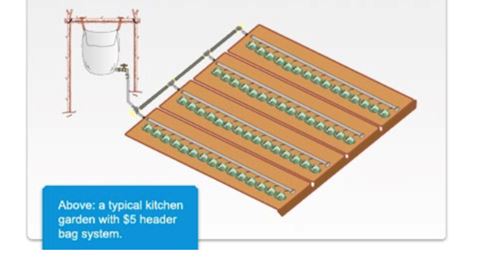

Figure 3: An IDE gravity fed drip irrigation system. Source: IDE.com
Using low tunnels, fruit has been shown to mature 2-3 weeks earlier due to the increased air temperatures while requiring less water and less labour hours spent weeding than field-grown plants (Balliu & Sallaku, 2017). Galia melon yield also was shown to increase by 5 times that of field grown plants. Also, the number of plants per unit area can be higher with protected agriculture, so under ideal conditions fruit harvest using low tunnels can be increased up to 10x over field agriculture (Balliu & Sallaku, 2017).
Practical Issues
Though there are many benefits for smallholder farmers from dry regions of the world to produce Galia melon, there are clearly potential downsides and risks as well. Galia melon is an excellent crop for protected agriculture or an intercrop system. However, if these interventions are not possible due to start-up costs, availability of material, labour, or knowledge, the high water requirement of Galia melon as an uncovered field crop may not be sustainable for many farmers in a semi-arid region with seasonal precipitation.
Links to Additional Resources
Gardening Know How: Explanation and Tips for Growing Galia Melon (Dyer, 2019)
John Scheepers Kitchen Garden Seeds: American Company Selling 170 Galia Melon Seeds for 35.5 USD
Stokes Seeds: American Company Selling 90,000 Passport Melon Seeds
YouTube Video: Hand-Pollinating Melon and Improving Melon Yield
IDE Global: 5 USD Drip Irrigation Kits
Journal Article Reporting the Nutritional Content of Melon Seeds, Source for Table 1 (Lazos, 1986)
References
1. Ahmad, R., Imran, A., & Hussain, M. B. (2018). Nutritional Composition of Meat. In Meat Science and Nutrition (Ed: M. S. Arshad). IntechOpen. DOI: 10.5772/intechopen.77045
2. Albazzaz, S. (2008). The Near East and North Africa: growing demand, limited resources. FAO Newsroom. FAO Link
3. Almekinders, C., & Thiele, G. (2003). What to do with the seed for small-scale farmers after all?. Cultivos Tropicales, 24(4), 5-8. ResearchGate Link
4. Arancibia, R. A. (2018). Low Tunnels in Vegetable Crops: Beyond Season Extension. Virginia Tech Works
5. Balliu, A., & Sallaku, G. (2017). Early production of melon, watermelon and squashes in low tunnels. In Good Agricultural Practices for greenhouse vegetable production in the South East European countries (pp. 341-351). Food and Agriculture Organization of the United Nations, Rome.
6. Bouzo, C. (2012). Effect of temperature on melon development rate. Agronomy Research, 10(1-2), 283.
7. Bucchignani, E., Mercogliano, P., Panitz, H.-J., & Montesarchio, M. (2018). Climate change projections for the Middle East–North Africa domain with COSMO-CLM at different spatial resolutions. Advances in Climate Change Research, 9(1), 66-80. ScienceDirect Link
8. Choipro, D. (2019). High-tech Agriculture: How to hand pollinate melons and increase fruiting. YouTube Video
9. Dyer, M. (2019). What Is A Galia Melon: How To Grow Galia Melon Vines. Gardening Know How
10. Fallik, E. (2000). Reduction of postharvest losses of Galia melon by a short hot-water rinse. British Society for Plant Pathology, 49(3), 333-338. Wiley Link
11. Glala, Saleh, Sawaan, & Omar. (2010). Developing new promising galia melon f1 hybrids by utilizing some egyptian melon genetic resources. ISHS Acta Horticulturae, 871, 157-164. ISHS Link
12. IDE.org. (2020). Drip+ Alliance. IDE.org
13. John Scheepers Kitchen Garden Seeds. (2020). John Scheepers Kitchen Garden Seeds
14. Lazos, E. (1986). Nutritional, Fatty Acid, and Oil Characteristics of Pumpkin and Melon Seeds. Journal of Food Science, 51(5), 1382-1383. Wiley Link
15. Leathers, H. (2017). The World Food Problem. Colorado: Lynne Reinner Publishers.
16. Lester, G., Jifon, J., & Makus, D. (2006). Supplemental Foliar Potassium Applications with or without a Surfactant can Enhance Netted Muskmelon Quality. Hortscience, 41(3), 741-744. ResearchGate Link
17. Milind, P. (2011). Musk Melon is Eat-Must Melon. International Research Journal of Pharmacy, 2(8), 52-57. IRJP Link
18. National Research Council. (2006). Lost Crops of Africa Volume Two: Vegetables. Washington: U.S. National Academy of Sciences.
19. Nordlie, T. (2002). UF Develops Method To Grow Exotic Galia Muskmelons. University of Florida News. UF News
20. OMAFRA. (2020). OMAFRA Vegetables - Cucurbits. Ontario Ministry of Agriculture, Food, and Rural Affairs. OMAFRA Link
21. Raizada, M. N. (2016). A Picture Book of Best Practices for Subsistence Farmers: North African version. Canada: University of Guelph. Accessible at www.SAKBooks.com
22. Statistics Canada. (2017). Average operating profit margin, by farm type, Canada, 2017. Statistics Canada
23. Stokes Seeds. (2020). Passport (Melon/Honeydew). Stokes Seeds
24. Sultana, R. (2014). Melon crops improvement through biotechnological techniques for the changing climatic conditions of the 21st century. International Journal of Genetics and Genomics, 2(3), 30-41. Science Publishing Group
25. Wicaksono, K. P., Widaryanto, E., & Najiyah, H. (2017). Drought Effect Simulation on the Growth and Yield Quality of Melon (Cucumis melo L.). Journal of Agronomy, 16, 147-153. ResearchGate Link